

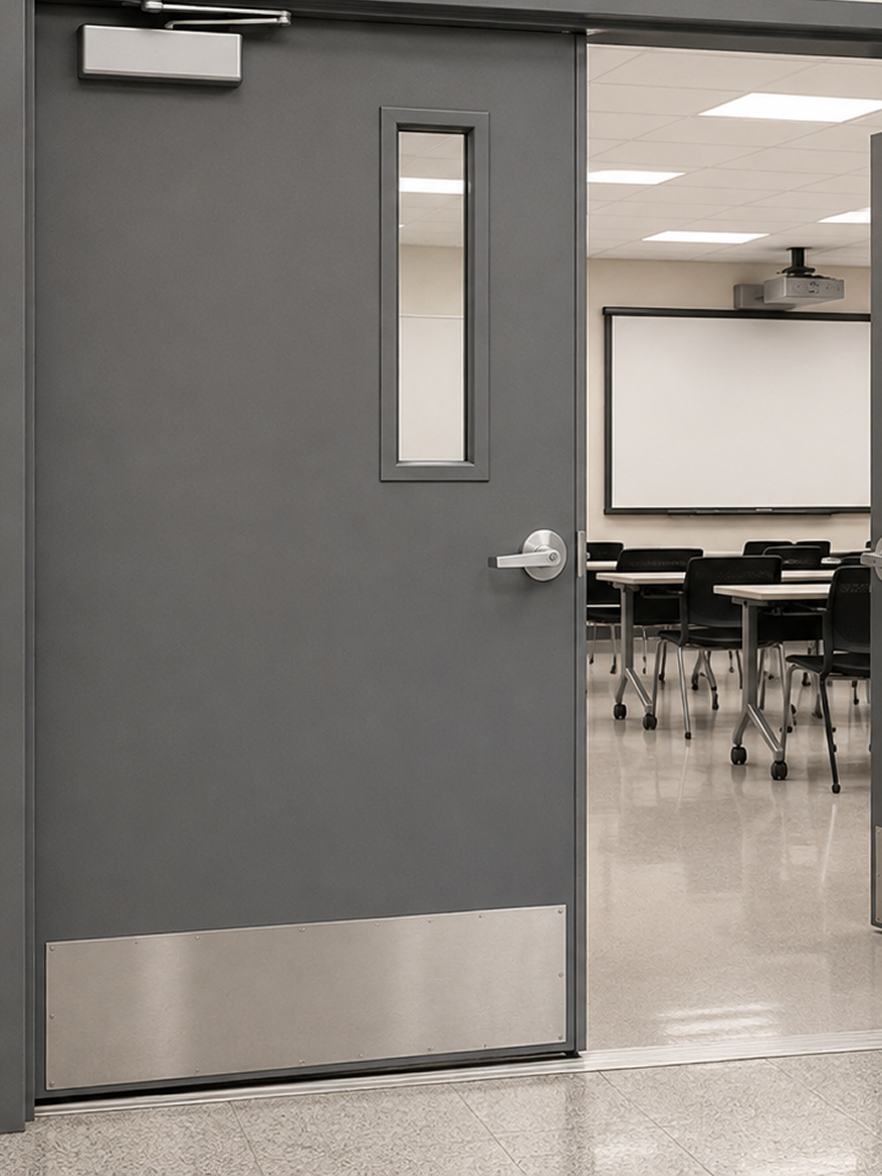
When it comes to commercial construction, selecting the right door system is about much more than appearance. Commercial steel doors provide the durability, security, and performance required for high-traffic environments such as schools, hospitals, warehouses, office buildings, and industrial facilities.
Whether you’re managing a new construction project or replacing existing openings, understanding the key considerations can help ensure long-term performance and code compliance.
Why Commercial Steel Doors?
Commercial steel doors are designed to withstand heavy daily use while providing superior security and durability compared to traditional residential doors. They are commonly specified for projects where reliability, fire protection, and low maintenance are essential.
Some key benefits include:
- High durability for heavy traffic
- Fire-rated options available
- Low maintenance requirements
- Excellent security
- Long service life
- Compatible with commercial hardware systems
Selecting the Right Door
Choosing the right commercial door depends on several project requirements.
Fire Rating
Many commercial buildings require fire-rated openings to comply with building codes. Fire-rated doors help slow the spread of smoke and fire, protecting occupants and property.
Common fire ratings include:
- 20 Minutes
- 45 Minutes
- 60 Minutes
- 90 Minutes
- 180 Minutes
Always verify local code requirements before specifying a fire-rated opening.
Door Material
Commercial steel doors are available in multiple configurations, including:
- Hollow Metal Doors
- Insulated Steel Doors
- Wood-Grain Steel Doors
- Stainless Steel Doors
- Specialty Security Doors
Each option offers different advantages depending on the building type and application.
Choosing the Right Frame
The door frame plays a critical role in the overall performance of the opening.
Popular frame types include:
- Hollow Metal Frames
- Drywall Frames
- Masonry Frames
- Welded Frames
- Knock-Down Frames
Properly manufactured frames help ensure smooth installation and long-term operation.
Commercial Hardware Matters
A commercial opening is only complete when paired with the correct hardware.
Typical hardware packages include:
- Hinges
- Locksets
- Cylinders
- Panic Hardware
- Door Closers
- Exit Devices
- Weatherstripping
- Vision Kits
- Door Stops
Coordinating all hardware before installation reduces delays and improves project efficiency.
Industries That Depend on Commercial Doors
Commercial steel doors are widely used across numerous industries, including:
- Government Buildings
- Healthcare Facilities
- Educational Institutions
- Manufacturing Plants
- Distribution Centers
- Warehouses
- Hospitality
- Commercial Offices
- Retail Buildings
- Multifamily Housing
Each industry has unique requirements for security, durability, accessibility, and code compliance.
Tips for a Successful Project
Before requesting a quotation, gather as much project information as possible, including:
- Door Schedule
- Architectural Drawings
- Hardware Schedule
- Opening Sizes
- Fire Rating Requirements
- Finish Preferences
- Delivery Location
Providing complete documentation helps suppliers prepare accurate quotations more quickly.